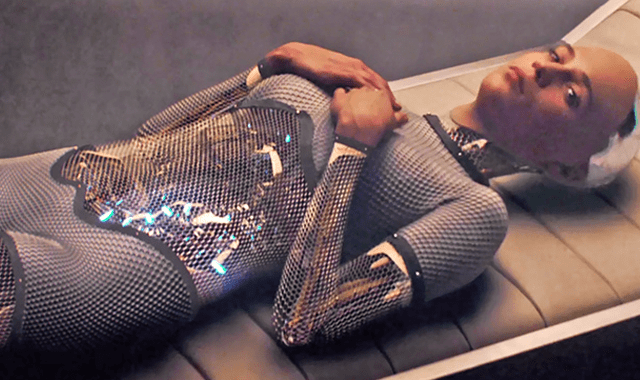
The development of digital images has opened a window to an illimited number of new narratives and story-worlds. A recurrent character since the appearance of modern science-fiction is the humanoid robot. As seen in Terminator (1984), Ghost in the Shell (2017), and so many more, the objectification of the body is a common sight in cinema today, and whilst robots are manufactured by men and thus neutral by nature, the genderfication and sexualisation of these characters seem inevitable. To study the question, I will focus my analysis on Ex-Machina (2014).
The film shows Ava, a robot built by a rich scientist named Nathan, whose aim is to code a robot that would develop its own consciousness. A robot for such an experiment doesn’t need a gender on paper, however, Nathan made Ava a woman, and we can see later in the film that all the prototypes before her were represented as women as well. Caleb is brought into the experiment to determine whether Ava has developed her own consciousness or if she simply pretends she has.

But, by the end of the film, we discover that Nathan gave Ava the challenge to escape herself from her room, which she does by manipulating Caleb. It recreates the typical patriarchal scenario of the damsel in distress that wants to escape her prison and does so with the arrival of the brave knight who will fall in love with her. In addition, Nathan explains to Caleb that he conceived Ava – and so we assume all the other prototypes before – with the ability to be intimate with a man and feel sexual pleasure (I don’t see how this would help a robot to develop a conscience.)
Ava is sexualised by her position of object and experiment and reflects the misogynist and patriarchal mind of her creator. My question now is ‘Is the film the representation of a misogynist experiment or does it portray misogyny this way to denounce the sexist tropes in storytelling that are integrated into our culture?’.
Aside: The title of the film reminded me of the expression ‘Deus Ex-Machina’ (translated to God from machines) which refers to the resolution of a story at its acme by the appearance of a God or holly-presence. The term comes from theatre as they would use the machinery to get a God on stage down from the ceiling. Can the film refer to the expression with Nathan thinking he’s a god for inventing Ava, Caleb who comes to resolve the story, or Ava – cause in the end, she brought her resolution to herself by manipulating Caleb ?
 Home
Home 
Leave a comment